Thinking about an EV but unsure how charging works with Noe Valley’s mix of older homes and street parking? You are not alone. Many buyers and sellers weigh garage access, panel capacity, and the reality of curbside charging in San Francisco. In this guide, you will learn the options, permits, costs, and simple steps to help you plan with confidence. Let’s dive in.
EV charging basics in Noe Valley
Level 1, Level 2, and DC fast charging all serve different needs. Most Noe Valley homes work best with Level 2 charging for daily convenience.
- Level 1: Uses a standard 120 V outlet and adds about 3 to 5 miles of range per hour. Works for light driving and long dwell times.
- Level 2: Uses a 240 V dedicated circuit and commonly adds about 15 to 30 miles of range per hour. This is the typical home solution in San Francisco.
- DC fast charging: High‑power public stations, not a residential solution for single‑family homes.
In a dense, hilly neighborhood like Noe Valley, Level 2 at home helps you avoid scheduling around public stations and gives you predictable charging overnight.
What to evaluate at a property
Parking setup
Start with where you park. A private garage or driveway makes charging simpler, more secure, and often less costly to install. If you rely on on‑street parking, your options depend on city programs and curbside access.
Electrical capacity
Older homes often have smaller main service panels, sometimes 60 to 100 amps, which can limit spare capacity. A licensed electrician can confirm panel size, available capacity, and whether a dedicated 240 V circuit will fit without upgrades.
Distance and wiring path
The longer the run from the electrical panel to your parking spot, the more labor and materials you will need. Detached garages or curbside runs may require conduit or trenching, which adds time and cost.
Building type and rules
Single‑family homes are straightforward. Multi‑unit properties introduce shared parking, HOA rules, or coordination among owners. If you are considering a condo or TIC, ask about charging policies and what is permitted.
Typical upgrades and costs in older homes
Many Noe Valley homes benefit from targeted electrical work before installing a Level 2 charger. Here is what to expect.
- Add a 240 V dedicated circuit: Common for Level 2 charging. Costs for simple installs often range from $500 to $2,500 when the panel has capacity and the wiring run is short.
- Longer runs, conduit, or a subpanel: Expect $1,500 to $6,000 depending on distance, access, and complexity.
- Service panel upgrade to 200 A: When there is no spare capacity, panel and meter work can run $2,000 to $6,000+ plus utility coordination.
- Charger hardware: Consumer Level 2 units typically cost $300 to $900.
- Curbside or bespoke on‑street installs: If a private connection across the sidewalk is allowed, costs can rise to several thousand to tens of thousands due to trenching and public‑right‑of‑way work.
San Francisco labor and permitting can push totals higher than national averages. Get multiple written quotes from licensed electricians that break out equipment, labor, permits, trenching, and any utility fees.
Permits, utilities, and curbside realities
Most electrical work that adds a new 240 V circuit or upgrades service requires a city permit and inspection. A licensed electrician typically handles the permit application, the work, and the final inspection scheduling.
If you need a service upgrade, the contractor will coordinate with the local utility for a service change and any required load calculations. Utility lead times can affect your project schedule.
For curbside installations, you are dealing with the public right of way. City agencies oversee street work, traffic control, and long‑term use. San Francisco has run pilots for on‑street charging and may accept resident requests for publicly accessible curbside chargers. Availability and rules change over time, so plan to check current policies or call 311 for guidance.
Garage vs curbside: pros and cons
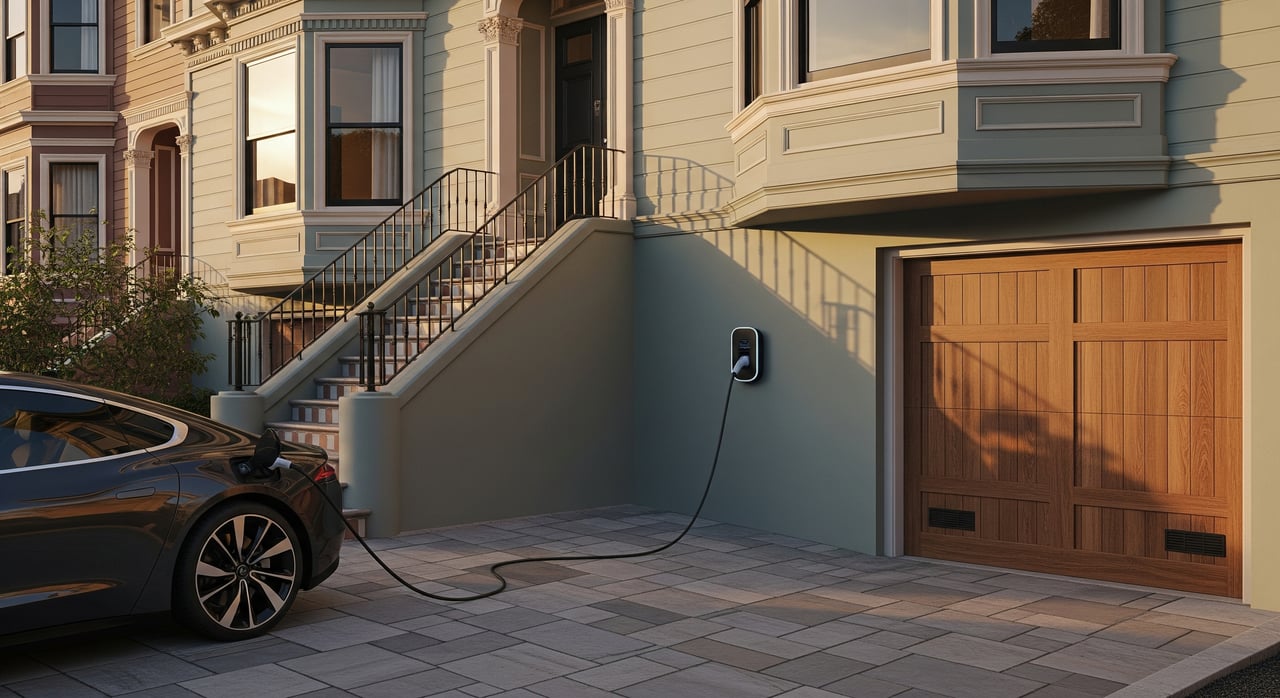
Garage or driveway Level 2
- Pros:
- Reliable and convenient charging at home.
- Often lower cost and simpler permitting.
- Equipment is protected from weather and tampering.
- Easy to market an EV‑ready garage to buyers.
- Cons:
- Not every Noe Valley home has usable off‑street parking.
- Detached garages may require trenching or longer runs.
Curbside or on‑street charging
- Pros:
- Enables charging for homes without off‑street parking.
- City‑installed public curbside chargers can serve multiple households.
- Cons:
- Access depends on street parking availability and demand.
- Permitting and installation in the public right of way are more complex and costly.
- A curbside charger may not be dedicated to one household unless authorized.
For daily EV use in a dense neighborhood, a personal, dedicated charger at home offers the most predictable experience.
Buyer checklist for Noe Valley homes
Use this quick list when touring or during inspections:
- Is there off‑street parking and room for a charger or a 240 V outlet?
- Is a 240 V outlet already present, and is it on a dedicated circuit?
- What is the main panel rating, and is there spare capacity?
- Any visible older wiring issues, such as fuses or knob‑and‑tube?
- If street parking is typical, what charging options are nearby?
- For condos or multi‑unit buildings, what do the rules say about charging and conduit work?
- Can the seller provide permits and receipts for past electrical work?
If a home lacks infrastructure but you are serious about it, request a conditional estimate from a licensed electrician before you write an offer.
Seller strategy to boost appeal
Buyers value simplicity. A clean, permitted solution can set your listing apart.
- Low‑cost upgrades: Install a Level 2 charger or at least a dedicated 240 V outlet in the garage. Finish permits and inspections.
- Documentation: Include permits, final sign‑offs, equipment specs, and electrician invoices in your disclosure packet.
- Higher‑cost options: If panel capacity is tight, evaluate a panel upgrade or subpanel. The return depends on the home and buyer profile.
- Messaging: If off‑street parking is limited, clearly communicate neighborhood public charging options.
Only market features like “EV‑ready garage” or “240 V outlet installed” when documentation supports the claim.
A simple installation roadmap
- Assess parking and electrical: Schedule a site visit with a licensed electrician.
- Get itemized quotes: Separate equipment, labor, permits, trenching, and any utility fees.
- Confirm rules: Check city permit requirements, right‑of‑way policies for curbside work, and HOA rules if applicable.
- Apply and coordinate: Submit permits and schedule any required utility service changes.
- Install and inspect: Complete the work and pass final inspection.
- Keep records: Save receipts, permits, and inspection sign‑offs for resale and disclosures.
Parking and resale in Noe Valley
As EV adoption grows in San Francisco, homes that offer convenient Level 2 charging or straightforward EV readiness often attract stronger buyer interest. There is no universal price premium to cite, but a simple, permitted charging setup can differentiate your property and reduce friction during negotiations. For a valuation perspective, look to local comps and buyer feedback in Noe Valley.
Local tips to avoid surprises
- Ask your electrician to verify panel capacity with a load calculation before you select equipment.
- If a service upgrade seems likely, build in extra time for utility scheduling.
- For detached garages or long runs, request separate line items for trenching, patching, and surface restoration.
- For curbside concepts, contact city agencies early to understand feasibility and lead times.
- Save every document. Clean paperwork supports disclosures and buyer confidence.
Ready to plan your move?
Whether you are upgrading a garage before listing or vetting a home with street parking, you deserve a clear, local plan. Our team can help you weigh costs, timing, and market impact, and connect you with experienced, licensed electricians. For tailored advice on your Noe Valley property, reach out to Colleen Cotter.
FAQs
What EV charger is best for a typical Noe Valley garage?
- Most homeowners choose a Level 2 charger on a dedicated 240 V circuit for faster, predictable overnight charging.
How much does it cost to add Level 2 charging in an older SF home?
- Simple installs often run about $500 to $2,500, while longer wiring runs or subpanels can reach $1,500 to $6,000, plus $300 to $900 for hardware.
Do I need a 200 amp panel for an EV charger?
- Not always; if your existing panel has spare capacity, a dedicated 240 V circuit may be enough, but limited capacity can require a service upgrade.
Can I charge at the curb by running a cord across the sidewalk?
- Sidewalks are part of the public right of way and are regulated; safe, permitted curbside solutions require city approval and coordination.
How long do permits and inspections take in San Francisco?
- Simple electrical permits can process in days to a few weeks, with inspections scheduled after work; utility coordination may add lead time.
What should sellers provide to market an EV‑ready home?
- Include permits, final inspection sign‑offs, electrician invoices, and clear labeling of any 240 V outlets or installed equipment in your disclosures.